
Luxury is a reflection of our desires : a sense of comfort, an experience of excellence, and an element of exclusivity that we all seek. In different contexts, its resonance may vary depending on who you ask.
Like in the past, it was primarily linked to material ownership, power, wealth, and class boundaries. It represented pride. It symbolised nobility, extravagance, and success. This association might still hold for older generations, but it is less relevant for today’s generations, like Millennials and Gen Z, who view things differently.
As a result, the perception of luxury is shifting, taking a broader perspective beyond the conventional view. A shift like this, though, does not happen by accident. Several factors have led to this. One is a changing customer base. Another is alterations in the market. Also, a digital revolution brought about by modern technology’s reach and speed.
These factors have contributed to the growth of the experience economy.
1. What is the Experience Economy?
The concept of the Experience Economy was first brought to light by B. Joseph Pine II and James H. Gilmore back in 1998, especially in their article “Welcome to the Experience Economy,” which appeared in the Harvard Business Review. They took it a step further with their book, “The Experience Economy”, which presents the idea that businesses must evolve beyond providing goods and services to creating memorable experiences for their customers. It introduces a transformative framework for how companies can stand out in a competitive marketplace (detailed below).
Now, this idea isn’t exactly brand new; it’s been around. But recently, it’s really started to take off. This transition marks a fresh chapter in how we see the economy, where experiences are recognised as unique and valuable offerings all on their own.
The Levels of Value: How Offerings Shape Customer Experience
As a way of understanding the experience economy, it is important to look at how its value progression differs from one offering to another:
- A commodity is only a raw material for making a product.
- A good is only a physical representation of a service.
- A service is only an operational process that allows the customer to get the most out of an experience.
- An experience is only memorable if it guides its participants to a goal.

Building a Customer-Focused Business Strategy Using the 4Es of Experiential Value
To develop a holistic business strategy, you must understand the four key dimensions of experiential value. The figure below shows the 4Es: Entertainment, Educational, Escapist, and Esthetic. These represent interaction types that shift between active and passive participation, aligned with customer involvement. For these experiential elements to be meaningful, customer engagement plays a key role.

2. Digital Transformation and the Growth of the Experience Economy
Many factors have contributed to the growth of this economy. But the pandemic has had the greatest impact. It accelerated the speedy development and adoption of digital solutions, intensifying the part of reality to an even greater extent, affecting:
- the behaviour of consumers,
- the nature of socio-cultural engagement,
- the methods of communication
The result is that today’s consumers are more aware, practical, and logical than ever before. Having global information and a connected world at hand influences their perception of value. Their buying decisions are becoming more thoughtful. And their focus is less on acquiring items and more on investing in what matters to them. Here is how BOF sums up this significant change:
“The new luxury is not buying a branded bag, it’s swimming with dolphins, hiking mountains, visiting far-flung amazing places — and then sharing the images on your phone.”
3. How Millennials and Gen Z Are Shaping the Market
For a long time, luxury travel used to be a privilege reserved for the elite. But this is not the case anymore. A study by Microsoft Advertising indicates an important trend. About 57% of all US consumers save money for such vacations or escapes. This is most notable among millennials. In fact, over 65% of this generation actively participates in this savings practice.
But this is NOT limited to travel. A report from Frontier Economics explains this in a somewhat broader context. Young adults, aged 18 to 34, feel more content with LIVE experiences. They prefer these experiences over buying products of similar or higher prices. This kind of expansion revolutionises the luxury market. Unique offerings and memorable consumer experiences become the brand’s top priority.
The key drivers of this transformation (Gen Z and millennials) have started to expect more than just products. McKinsey & Company research clearly shows that 71% of customers want some sort of tailored and authentic experience. Additionally, 75% of those customers get frustrated when their expectations are not met.
To connect with these new demographics, brands need to understand them clearly. They should pay close attention to their behaviour and expectations. The takeaway? This development is not just strategic rethinking for brands; it is a responsive adaptation to changing consumer wants and needs. Because when customers feel valued, respected, and acknowledged, they turn into brand advocates, and long-term growth follows.
Making buying decisions based on customer experience.

Image Courtesy – PwC Future of Customer Experience Survey 2017/18
4. What Brands Are Doing To Build Connections Through Experiences
Millennials and Gen Z are becoming the primary target audience for businesses and gaining influence globally. With this in mind, brands are updating their approach. They aim to reach these new consumers and attract them with innovative ideas and strategies. Here are some examples.
Technology Integration: Virtual Meets Reality
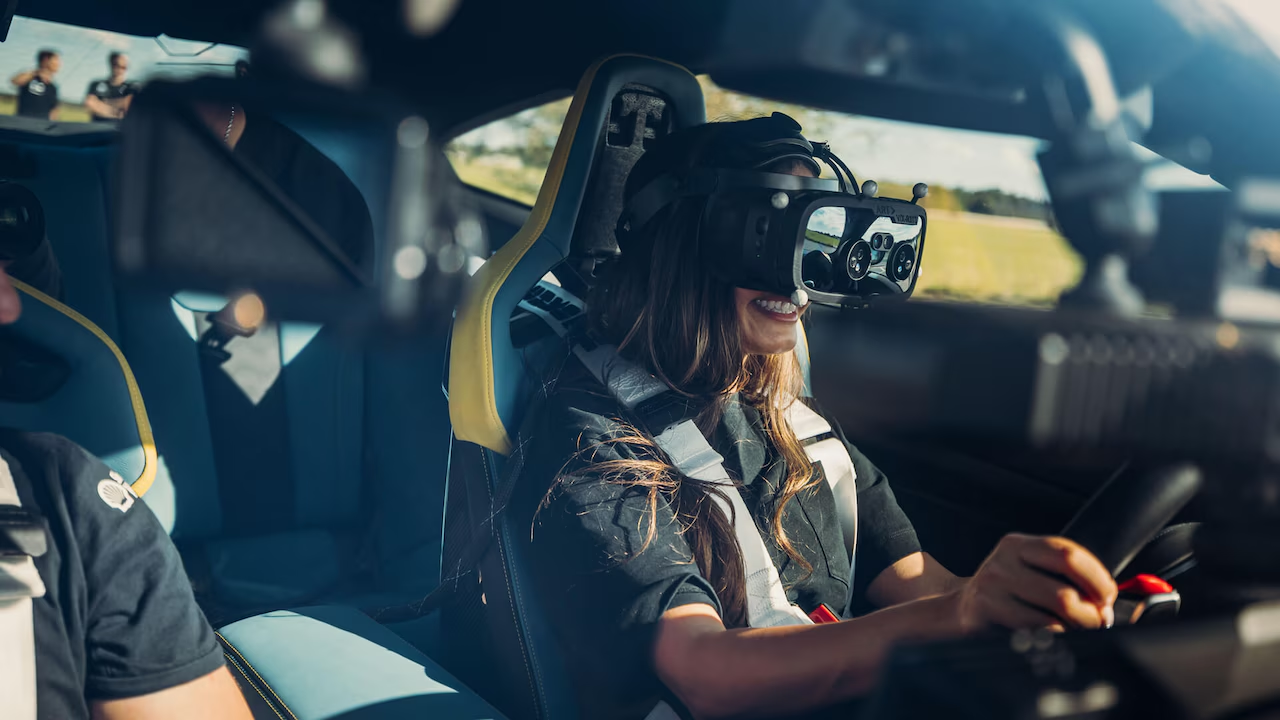
BMW M – Redefining Driving with Mixed Reality
A BMW M4 Competition Coupé is a training vehicle. It is designed to push the driver’s motoring skills while immersing them in a futuristic urban racing world. With innovative VR/MR technologies, BMW M Mixed Reality offers practical handling exercises. It combines virtual and physical components, providing an interactive experience that brings a whole new depth to driving, giving participants a greater sense of control. The best part? The training is led by experienced instructors who make sure that everything goes smoothly.
Combining Cultural Heritage With Storytelling
Gucci Cosmos: A Celestial Journey Through 102 Years of Fashion Heritage
The latest exhibition by Gucci, titled Gucci Cosmos, was held at 180 Studios in London in late 2023. This exhibition was mesmerising. It beautifully illustrated the brand’s rich heritage and progression through the years, carrying a cosmic theme that symbolised interconnectivity — an excellent representation of the Gucci creative DNA universe.
Designed by British artist Es Devlin and curated by Italian fashion critic Maria Luisa Frias, it featured iconic pieces and artefacts gathered through the brand’s 102-year journey, which included items by former creative directors and artists. Effortlessly expressing how, with time, Gucci continues to serve as a reflection of itself and a leader in cultural innovation.
The exhibition’s imaginative space fully immersed visitors, giving them a sense of a historical legacy that continues to reinvent itself. Yet, it holds close to its roots.

A Fusion of Fashion and Technology
The Vogue x Snapchat Experience
In early 2023, Snapchat and Vogue collaborated to stage a unique fashion show on Regent Street, London. The show featured iconic pieces from brands, including Christian Dior Couture, Versace, Richard Quinn, Stella McCartney, and Thebe Magugu.
It was curated by British Vogue’s Editor-in-Chief and Condé Nast’s European editorial director, Edward Enninful. Each of the brands had its own display spaces, like Dior’s black box and Stella McCartney’s immersive fungi room.
A fascinating aspect of the event was Snap’s AR technology inclusion. Providing visitors with the freedom to see the fine details of the garments and even try them on virtually, promoting body positivity and inclusivity.
Fashion was re-envisioned in a way that echoed Maria Grazia Chiuri’s vision of challenging conventional beauty standards. In terms of its innovative approach to presentation, user experience, and accessibility, this collaboration deserves applause.

Taste of Luxury
The Strategic Shift of Brands into the Restaurant Business
A notable trend in this respect is, brands teaming up with cafés. By building a culinary concept that aligns with attracting local enthusiasts and delighting brand loyalists.
Most recently (in 2022), Louis Vuitton entered the F&B game with its first-ever branded restaurant in Chengdu. Gucci Osteria added another restaurant of its own in South Korea. These experiences tailor-make dining occasions to the targeted customer of a given brand. They elevate brand knowledge and help promote bonding with the customers.
Partnering with cafés is cost-efficient and flexible for such brands. It allows them to capitalise on this growing movement and also reach potentially newer audiences.


Sensory Shopping
How Brands Are Turning Retail into an Art Form
Consumers have returned with massive enthusiasm to physical shopping post-pandemic. Hence, brands are now embracing a new wave of hyper-physicality. This approach asserts their daring statements of power and provokes amazement. Catering to the craving for real-life experiences. With art-centric concepts and a powerful emotional appeal, retailers are becoming creators of sensory experiences. These experiences are much more significant than conventional transactions.
The French fashion brand, Jacquemus, is an excellent example of how art and entertainment integrate within a commercial environment. This is clear through its vibrant pop-up shops and appealing brand campaigns. Very often, these establishments have interactive elements, exhibiting incredible visual aesthetics. Making popping in not just any other ordinary shopping spree. But something that is exceptional and truly memorable.


5. The Power of Brand Experience
Brand experience is the battleground of the modern marketplace. It’s a potent mix of the tangible – efficient customer service, the intangible – a brand’s personality, values, and story.
A positive experience assists customers in better understanding a brand’s value proposition and commitment to excellence. It acts like a magic touch that encourages loyalty, drives sales, and provides a competitive edge.
Then again, a negative experience can have a catastrophic effect on a brand’s reputation. Dissatisfied customers not only churn but also share their disappointing experiences enthusiastically. These actions can cause serious damage to sales and market position. In the wise words of PwC:
“If experience isn’t your strategy, you’re doing it wrong”


Leave a Reply